The School of Strange Weather
EKA Contemporary Art MA student take-over
of
the Estonian Pavilion ‘The House of Leaking Sky’
by Merike Estna,
61st Venice Biennale, Venice, Italy,
2-16th August, 2026
Merike Estna offers the pavilion as an open-ended platform for the students to present their performative projects. The School of Strange Weather constitutes an important layer in the life cycle of the pavilion, which Estna is presenting as a live process. It also relates to her long-time practice of hosting a variety of artists and events in the space she creates with her paintings. During The School of Strange Weather, Estna will not be painting at the pavilion, however, the space remains open to visitors and her large-scale canvases, the tiled floor and benches can be viewed.
The young artists from the Estonian Academy of Arts choreograph works ranging from daily acts of care for one another as well as the space they have been invited to inhabit as guests to longer durational movement pieces, unfolding both inside and outside the decommissioned church, now serving as both a community centre and an art pavilion. The artists take this as an opportunity to reflect on their histories and shared environment, alongside more intimate personal stories and experiences that invite connection and reflection from the visitors attending these events. The works explore subjects ranging from anxieties surrounding art, time, industrialization, and change to the challenges and possibilities of communicating across barriers within the global context of the Venice Biennale.
‘How hard and sweet, this taste of flesh’
Interactive performance
1 hour, once a day,
5 days in a row
2026
In the medieval motif of the Eaten Heart, incorporation
symbolizes the ultimate desire: to eat and be eaten by your
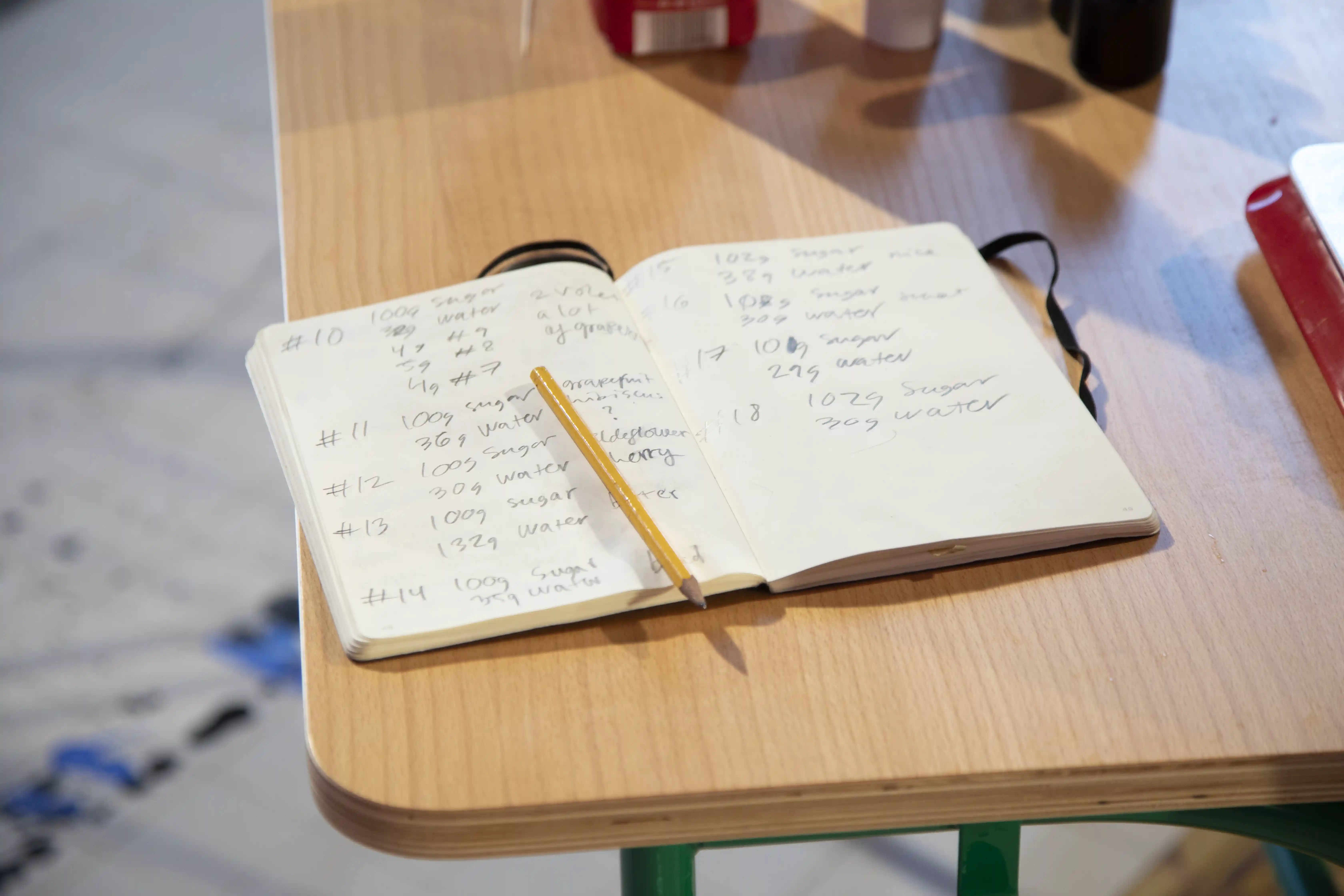
lover. Taking on the recipe as a performance score, and
entering as lover and cook, for 1 hour every day, the artist
would engage in a loop of repetitive tasks: attempting, failing,
and learning how to make hard boiled candy without a candy
thermometer.
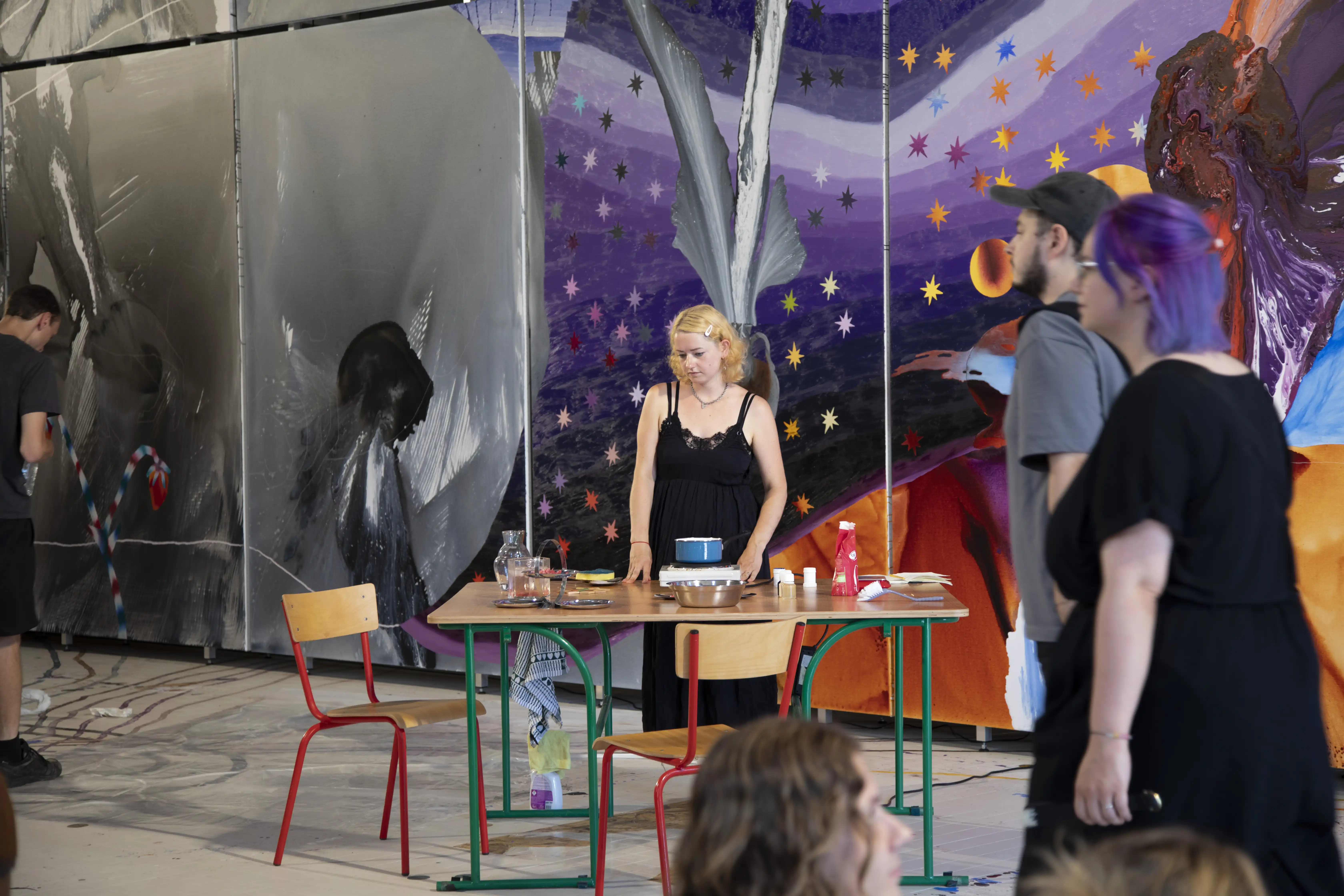
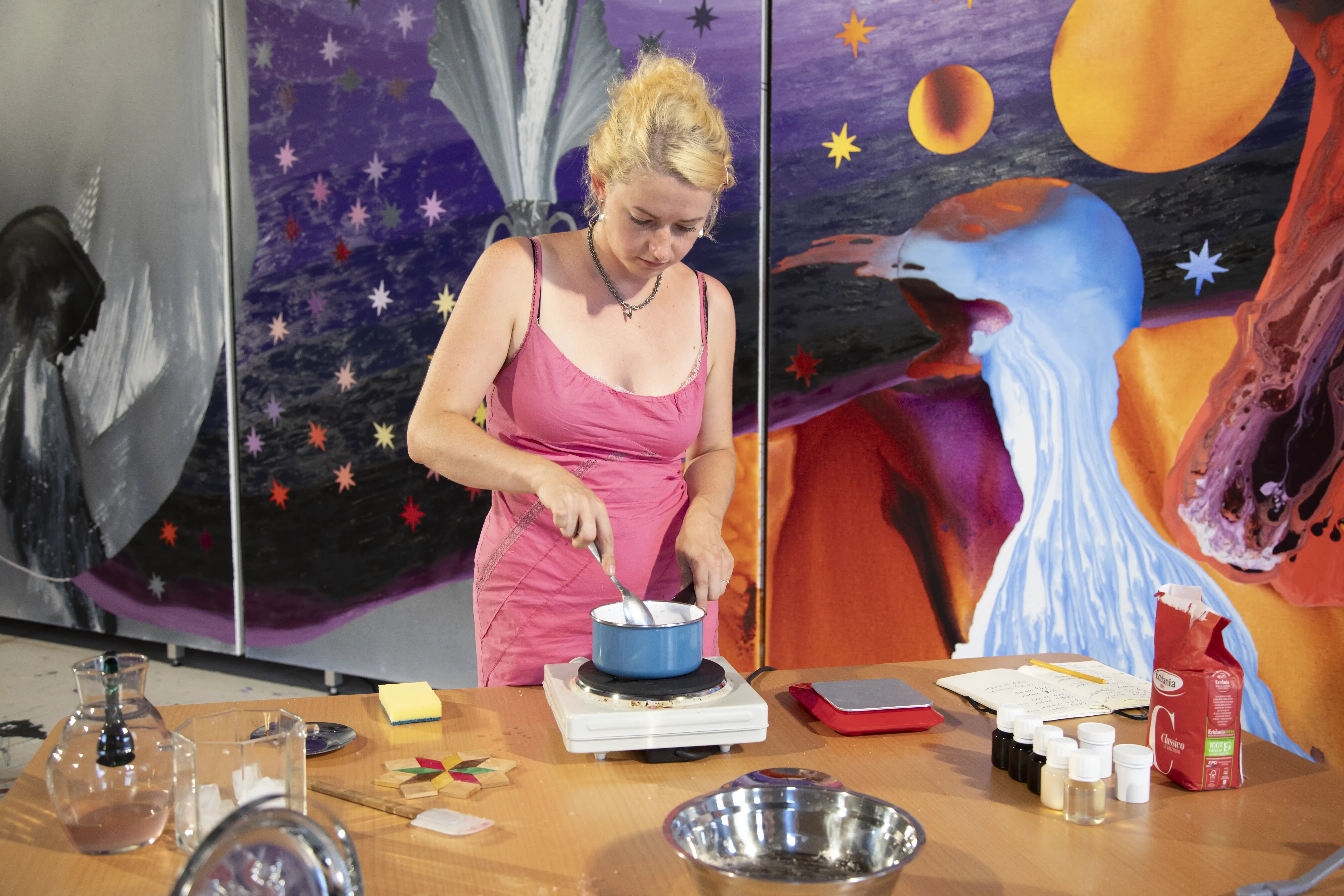
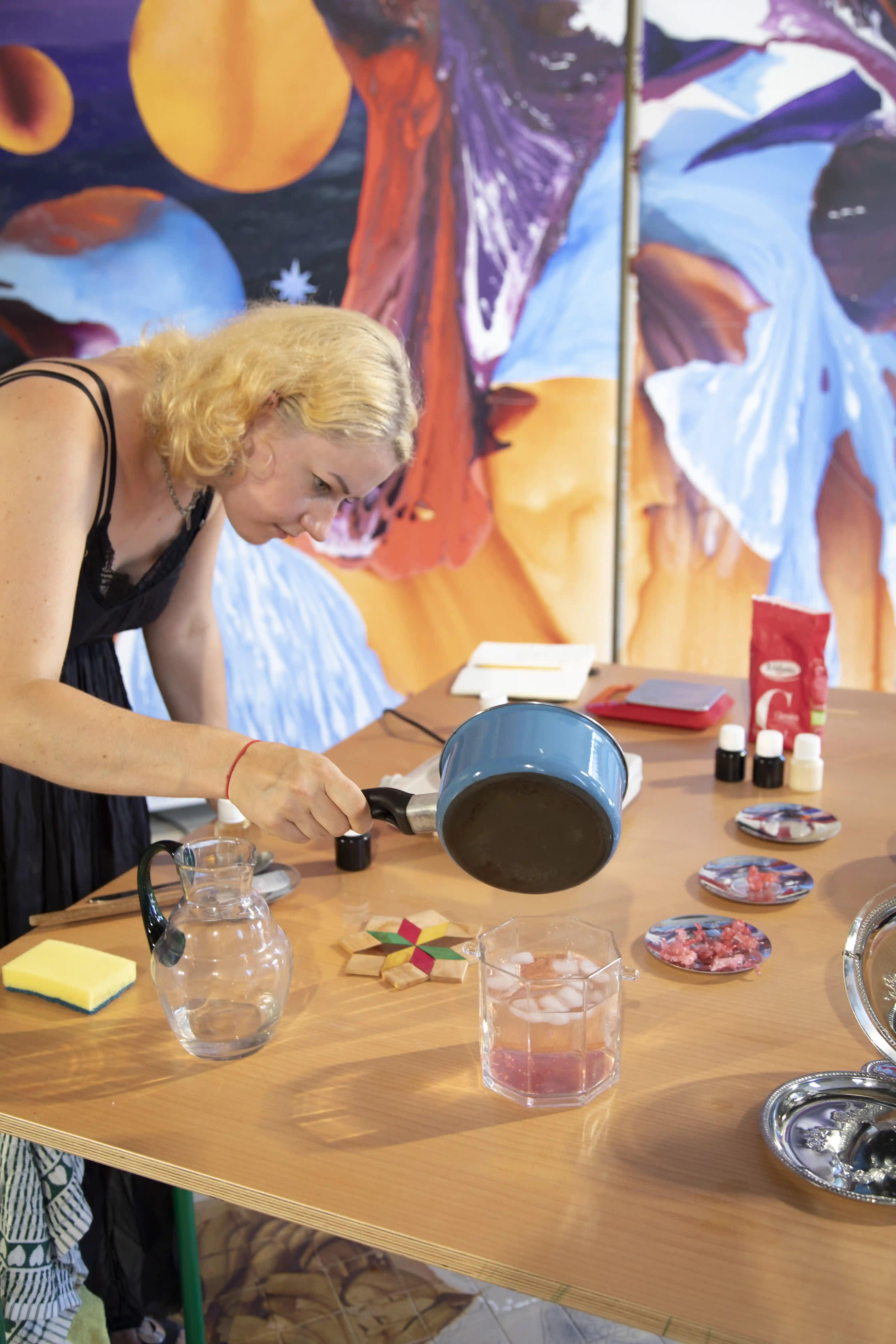
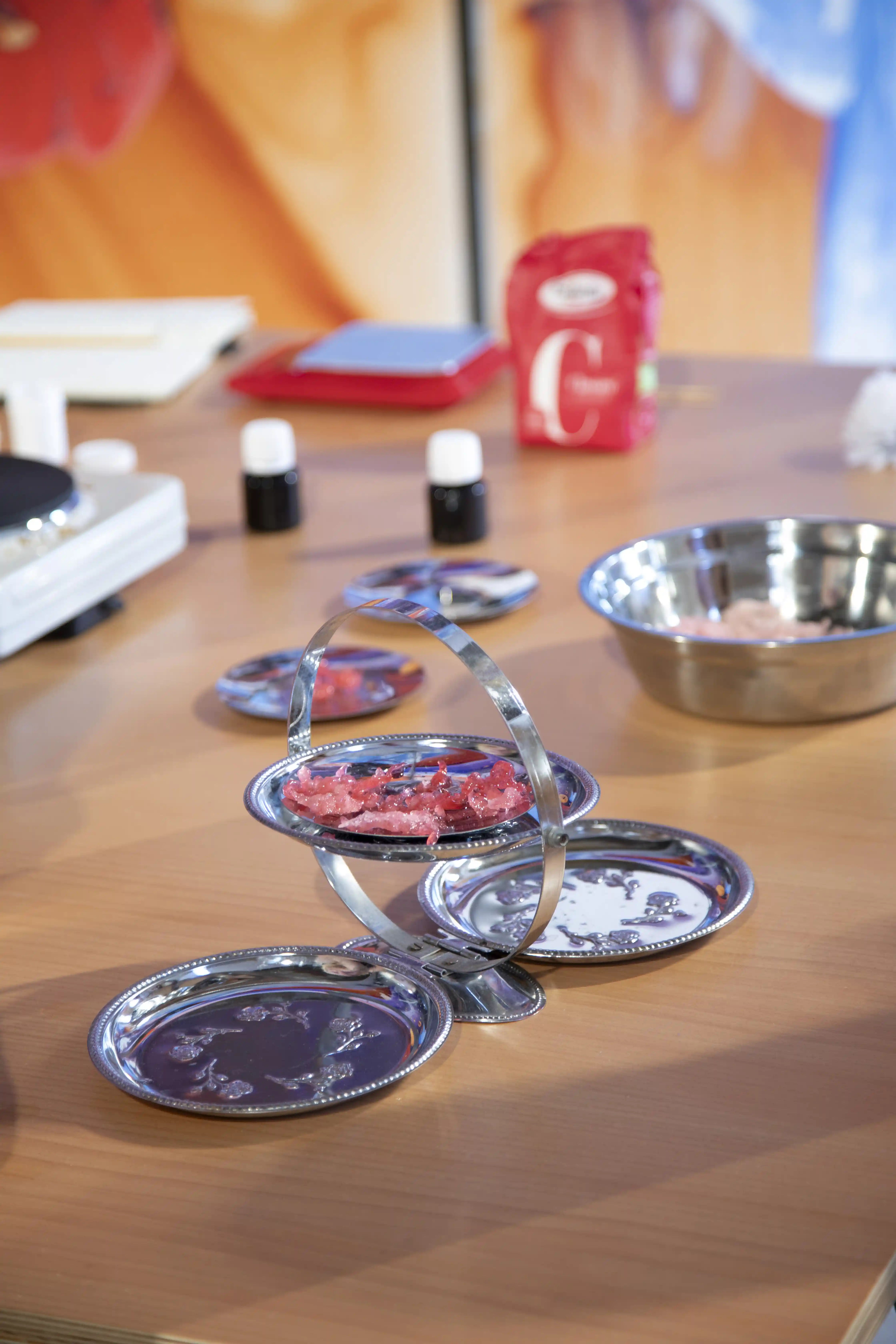
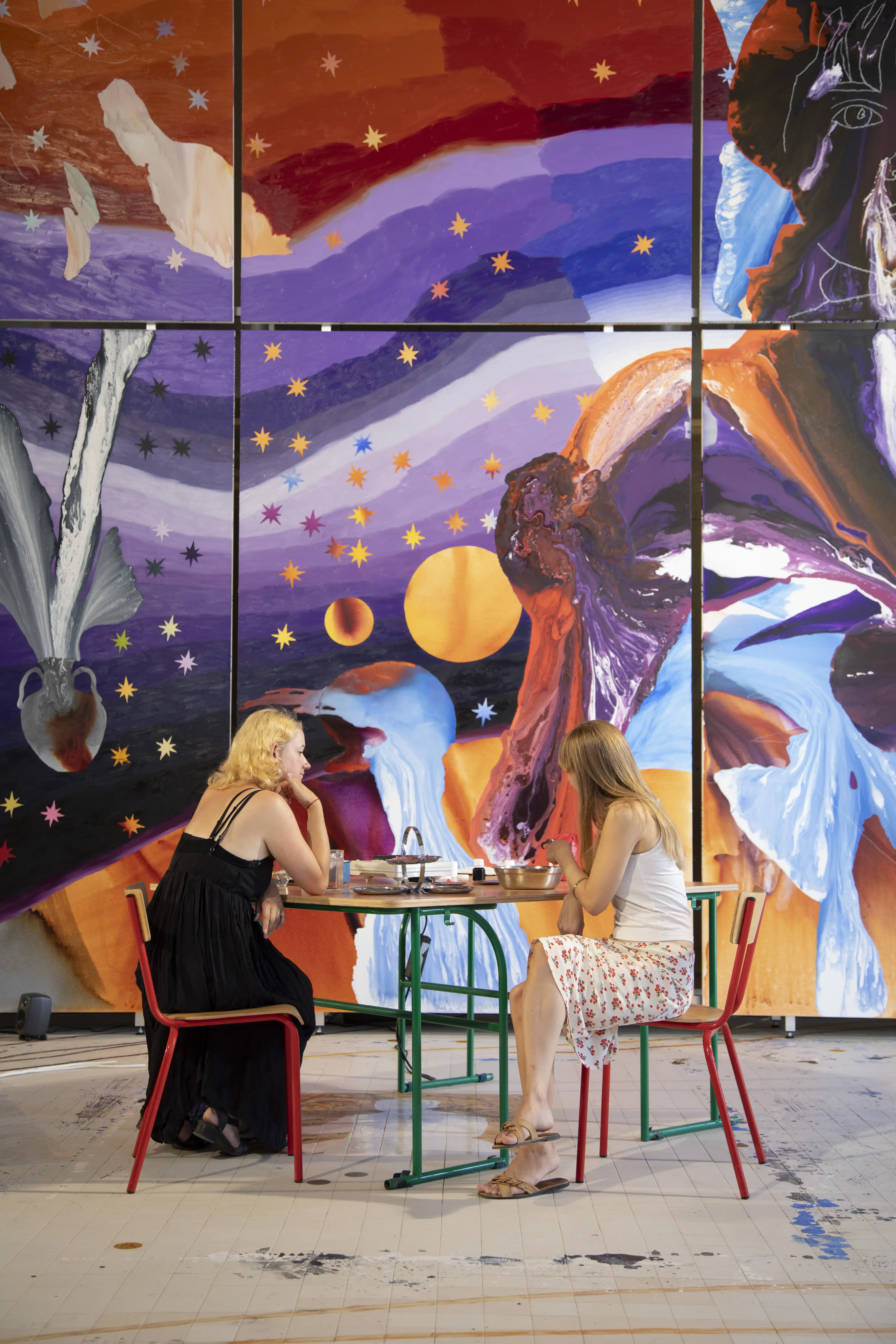
The performance took place around a makeshift kitchen table, with a stove, ingredients, recipe book, serving platter,
and a chair for a visitor to join the artist at the table. Boiling
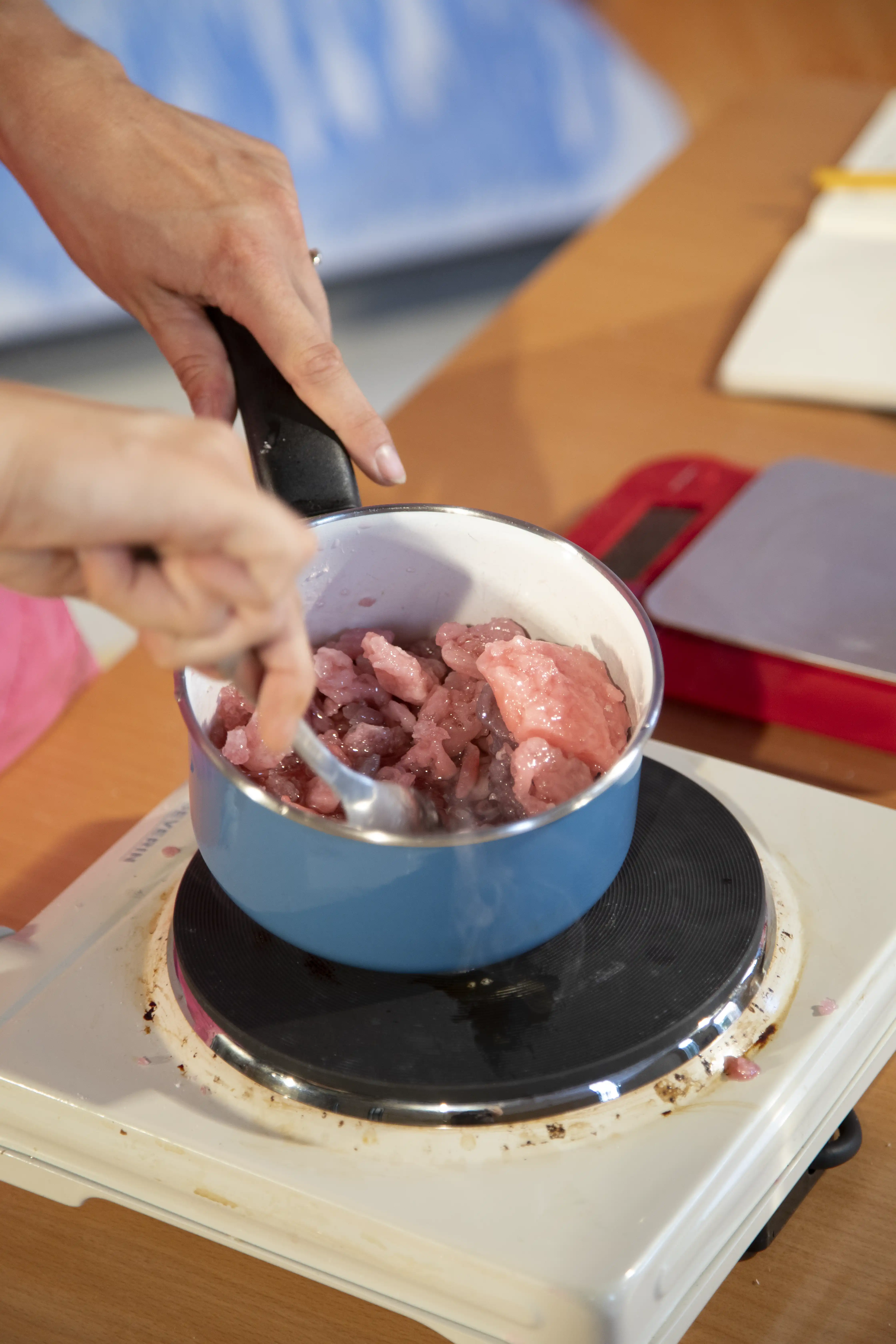
the sugar under close attention, as the candy can easily split
if not careful, the artist would decide to perform an act of
edible molybdomancy: a divination process executed through
the pouring and hardening of the candy in an ice bath, also a
common technique for testing the hard crack stage of caramel.
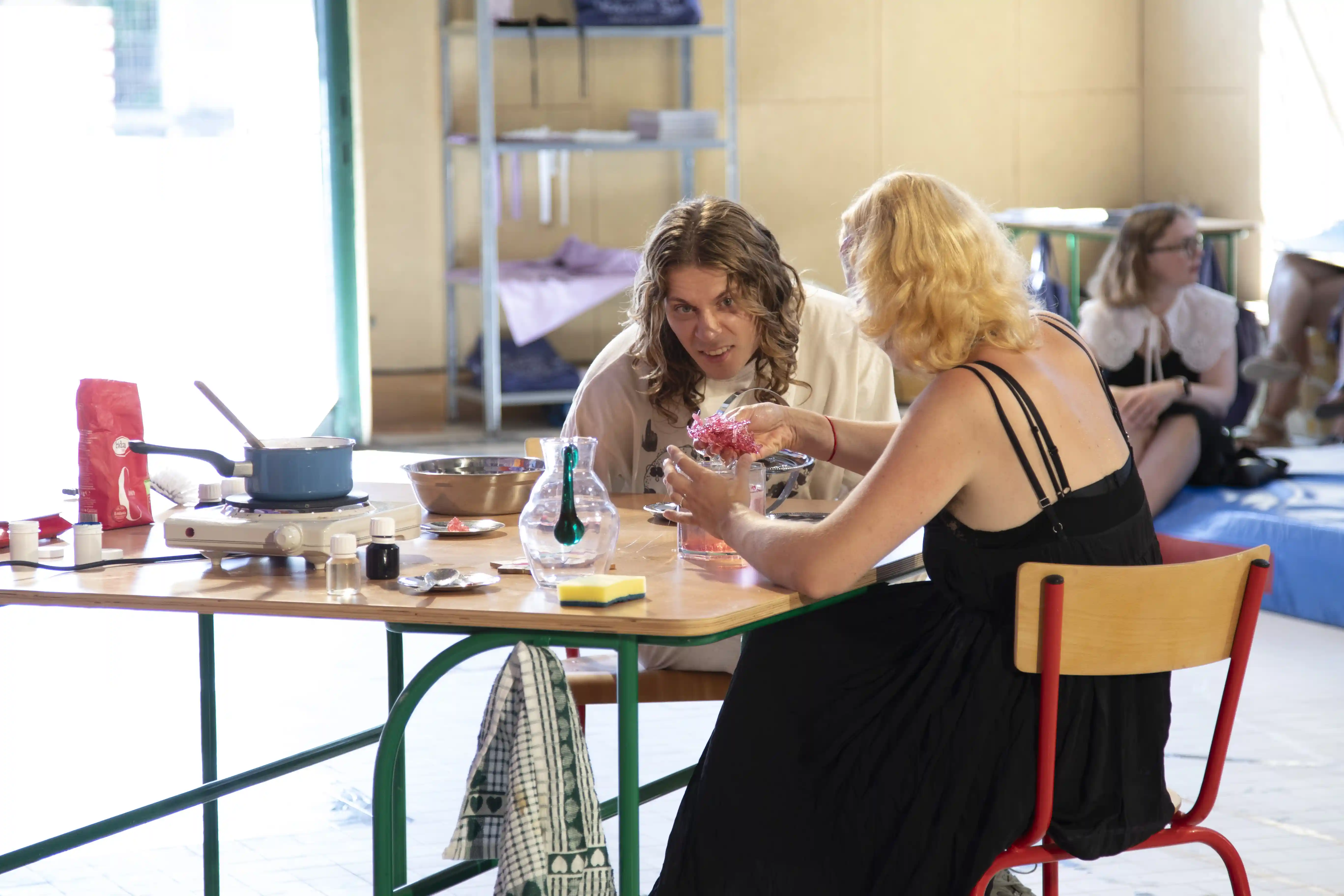
The artist would then read the crystallised candy, fleshy, sticky,
spiky or crumbly, and from this she would decide whether or
not to invite an audience member to eat it with her.
Through this act of repetitive making and pouring, while
retaining the right for not sharing as well, the artist examines
the implied invitation embedded in the material of the candy,
as something both delicious and shameful to consume, relating
this to her own body, this candy organ appears as brittle, naked,
and open, which she may, or may not, be willing to share.
Photos by: Ronja Siitonen @ronjasiitonen
Maria Wrang-Rasmussen - Copyright © 2026.